This store requires javascript to be enabled for some features to work correctly.


Engagement ring styles are generally defined by their setting design, stone arrangement, and overall aesthetic, rather than just the diamond shape. From timeless solitaires to halos and trilogy, each style has its own character and symbolism. Understanding different styles and settings will help you choose the perfect engagement ring.
An engagement ring style refers to the overall design language and aesthetic direction of the ring. It defines the visual identity whether the ring feels modern, classic, vintage-inspired, minimalist, or decorative.
Style is about expression and appearance, shaping how the ring looks and feels at first glance. In simple terms, the style defines the personality of the ring.
An engagement ring setting refers to the structural method used to mount and secure the centre stone. It determines how the diamond is held, how light interacts with it, and how practical the ring is for daily wear.
The setting is both functional and aesthetic, directly impacting durability, brilliance, and comfort. In simple terms, the setting defines how the diamond is set into the ring.


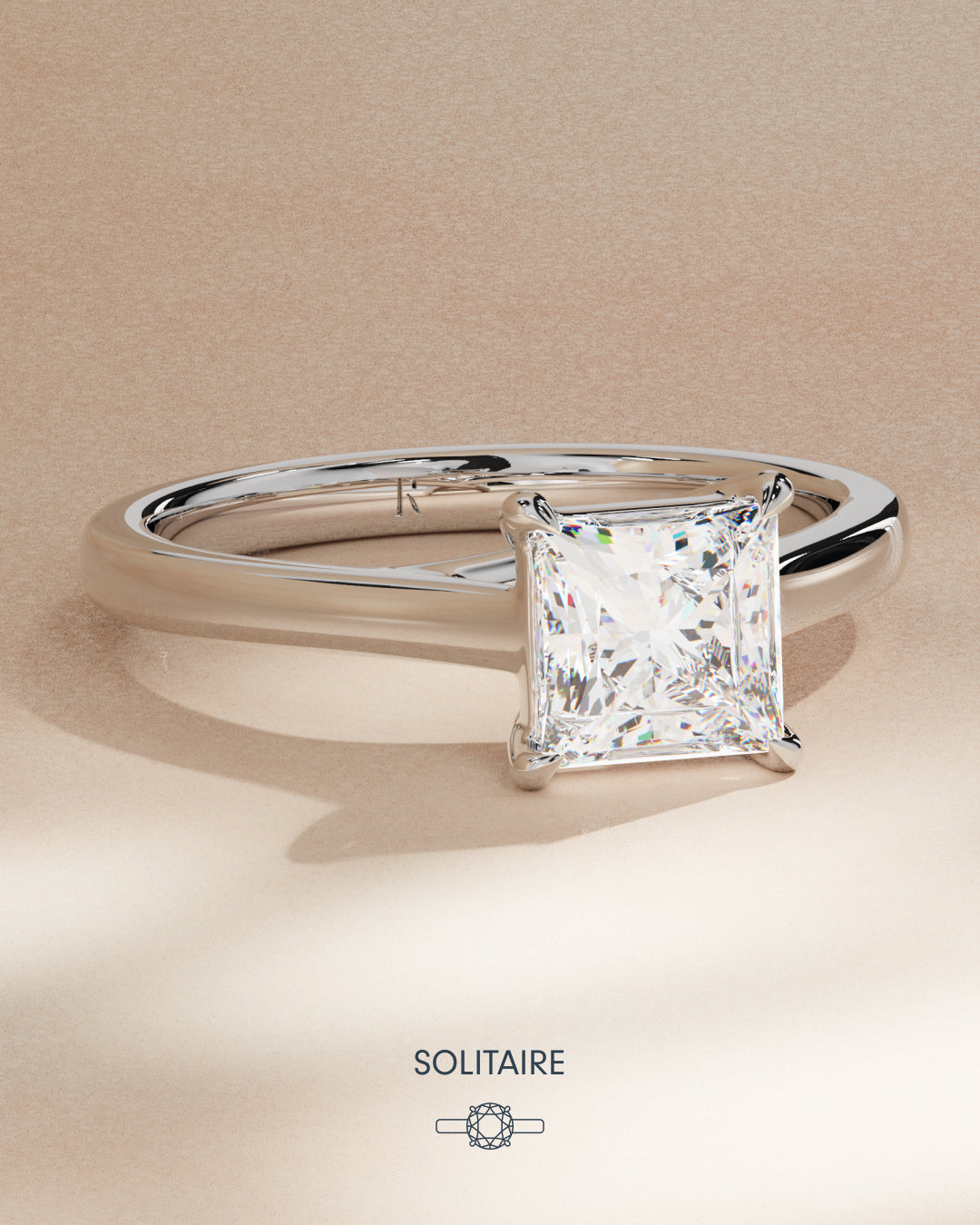
A solitaire engagement ring is the most classic and iconic engagement ring style. It features a single centre stone, allowing the diamond to take full focus without distraction. This style is known for its clean, timeless and elegant appearance.
A solitaire works beautifully with almost every diamond shape, from round brilliant to oval or cushion cuts. It is also highly versatile, pairing effortlessly with wedding rings in future.
Best for: Minimalist style, timeless appeal, and showcasing the centre diamond.
Key feature: One centre stone with no additional accent stones.


Halo engagement rings surround the centre stone with a circle of smaller diamonds. This creates a dramatic sparkle effect and can make the centre diamond appear larger.
This style is ideal for those who love glamour and brilliance. Variations include double halos or hidden halos, where the sparkle is visible from the side for a subtle twist.
Best for: Maximum sparkle and a bold, eye-catching look.
Key feature: Diamond surround that enhances size and brilliance of the centre diamond.
Trilogy engagement rings feature a central diamond flanked by two side stones which are smaller in size than the centre stone. This design is rich in symbolism, often representing the past, present and future of a relationship.
The side stones can either match the centre diamond or contrast with it using different shapes or gemstones for a more personalised design. Popular side stone shapes include pear, trapezoid, baguette, and round.
Best for: Meaningful symbolism and balanced design.
Key feature: Three stones set in alignment.


Diamond band engagement rings also known as pavé rings feature small diamonds set closely together along the band, creating a seamless, sparkling surface. The term “pavé” comes from the French word for “paved,” reflecting the diamond-encrusted look.
This style enhances brilliance without overshadowing the centre stone, offering a refined touch of luxury and elegance.
Best for: Those who love extra sparkle.
Key feature: A diamond-set band that delivers continuous shimmer.


The Toi et Moi ring is a romantic and distinctive design featuring two centre stones set side by side. The name means “you and me” in French, symbolising the union of two individuals coming together in love.
This style allows for endless creativity, pairing different diamond shapes, sizes, or even contrasting gemstones for a unique and personalised look. It’s both modern and meaningful, with a design that feels intimate and expressive.
Best for: Romantic symbolism and a unique, personalised style.
Key feature: Two centre stones representing two individuals united together.
Engagement ring settings refer to the different structural methods used to hold and secure the centre stone within a ring design. Each setting type is carefully engineered to influence not only how the diamond is mounted, but also how it interacts with light, how secure it is in everyday wear, and how the overall ring is visually balanced on the hand.
Some settings are designed to maximise brilliance by allowing more light into the stone, while others prioritise protection, comfort, or a clean modern finish. Understanding the different types of engagement ring settings is essential before choosing a design, as the setting has a direct impact on both the appearance and practicality of the ring over time.


A floating head setting creates the illusion that the diamond is suspended above the band with minimal visible support. This modern design focuses on light and openness.
Key benefits:


A cathedral engagement ring setting is a classic and highly elegant design where the centre stone is elevated above the band by two arches of metal that rise from the shank to meet the diamond’s setting. These arches resemble the curved structure of cathedral architecture, which is where the setting gets its name.
Key benefits:


A bezel setting is a sleek and contemporary engagement ring setting where the centre stone is encircled by a smooth rim of metal. This rim can either fully surround the diamond (full bezel) or partially frame it (half bezel), depending on the desired look and level of exposure. What sets the bezel apart is its emphasis on protection and clean design that shields the edges of the stone from knocks and daily wear.
Key benefits:


An East-West setting is a modern design approach where the centre stone is set horizontally across the band, rather than the traditional vertical (north-south) orientation. This style is most commonly used with elongated diamond shapes such as oval, emerald, marquise, and pear cuts. Visually, the East-West setting can create the illusion of a wider spread across the finger.
Key benefits:
Choosing an engagement ring style is about finding the right balance between personal taste, lifestyle, and how you want the diamond to be presented. The style should reflect the wearer’s aesthetic preferences, whether that leans towards something classic, more detailed, or modern. At the same time, it’s important to consider how the ring will be worn day to day. Understanding the differences between high-set and low-set engagement rings can help you decide which design best suits your lifestyle, as lower set and secure designs tend to suit active lifestyles, while higher set or intricate styles offer greater visual impact but may require a little more care.
Another key factor is how much emphasis you want on the centre stone. Simpler styles place full focus on the diamond itself, whereas more elaborate designs enhance it with additional sparkle. A well-chosen style should also feel comfortable on the hand and work seamlessly with a future wedding ring.
Ultimately, the right engagement ring style is one that not only looks beautiful, but also feels practical, personal, and lasting over time.